Bedroom Ideas That Instantly Boost Your Sleep AND Style

Discover Bedroom Ideas That Instantly Boost Your Sleep AND Style with expert tips on colors, lighting, and furniture to create your perfect relaxing retreat
Your bedroom is your own special place. It’s where you spend a lot of time resting and getting ready for the day. The National Sleep Foundation says adults need 7 to 9 hours of sleep each night for good health. Making your bedroom sleep-friendly and stylish is key for your health and your home’s look.

The things around you affect how well you sleep. Good design turns a simple room into a place where you can relax. You can have both comfort and beauty in your bedroom.

This guide will show you how to make your bedroom better. You’ll learn about colors, lights, textures, and furniture. Every choice you make helps create a space that helps you sleep well and shows who you are.

Key Takeaways

  • Your bedroom environment directly affects sleep quality and daytime performance
  • Calming color palettes create a natural foundation for restful spaces
  • Quality bedding and pillows improve comfort and sleep duration
  • Strategic lighting reduces stress and supports your body’s natural rhythms
  • Decluttering removes distractions and promotes mental peace
  • Natural elements like plants enhance air quality and visual appeal
  • Consistent bedroom design encourages healthy sleep habits

The Importance of Sleep-Friendly Bedroom Design

Your bedroom is more than just a place to sleep. It’s your personal sanctuary. The environment you create affects how well you sleep and how refreshed you feel. A sleep-friendly bedroom design focuses on noise, light, temperature, and comfort.

Creating a bedroom with sleep in mind tells your brain it’s time to rest. When you enter a space designed for sleep, your body starts to relax. This happens because your surroundings send a message to your nervous system.

Understanding the Connection Between Environment and Rest

Your surroundings greatly affect your sleep quality. The American Academy of Sleep Medicine found that reducing noise and blocking out light helps you fall asleep faster. Small changes in your bedroom can improve your sleep patterns.

Consider these environmental factors:

  • Ambient noise levels that disrupt sleep cycles
  • Light exposure from windows and electronics
  • Room temperature between 60-67 degrees Fahrenheit
  • Air quality and humidity levels
  • Clutter that creates visual stress

Psychological Benefits of a Calm Sleeping Space

A peaceful bedroom is a mental escape from daily pressures. When your space feels calm and organized, your mind can let go of stress and worry. This creates the perfect conditions for deep, restorative sleep.

Your bedroom environment sends signals to your brain about safety and relaxation. A well-designed space tells your mind it’s time to unwind. This psychological shift is as important as the physical comfort of your mattress. By prioritizing a tranquil atmosphere, you create a personal retreat that supports both your mental and physical health.

Bedroom Ideas That Instantly Boost Your Sleep AND Style

Changing your bedroom doesn’t need a big renovation or spending a lot of money. Making smart changes can make your room both comfy and stylish. Even small tweaks can make a big difference, helping you wake up feeling great every day.

Interior designers talk about the “triangle of comfort.” It’s about balancing three important things in your room:

  • Your bed as the main focus
  • Storage for keeping things organized
  • Clear paths for easy movement

This setup makes your room both functional and comfortable for rest and movement.
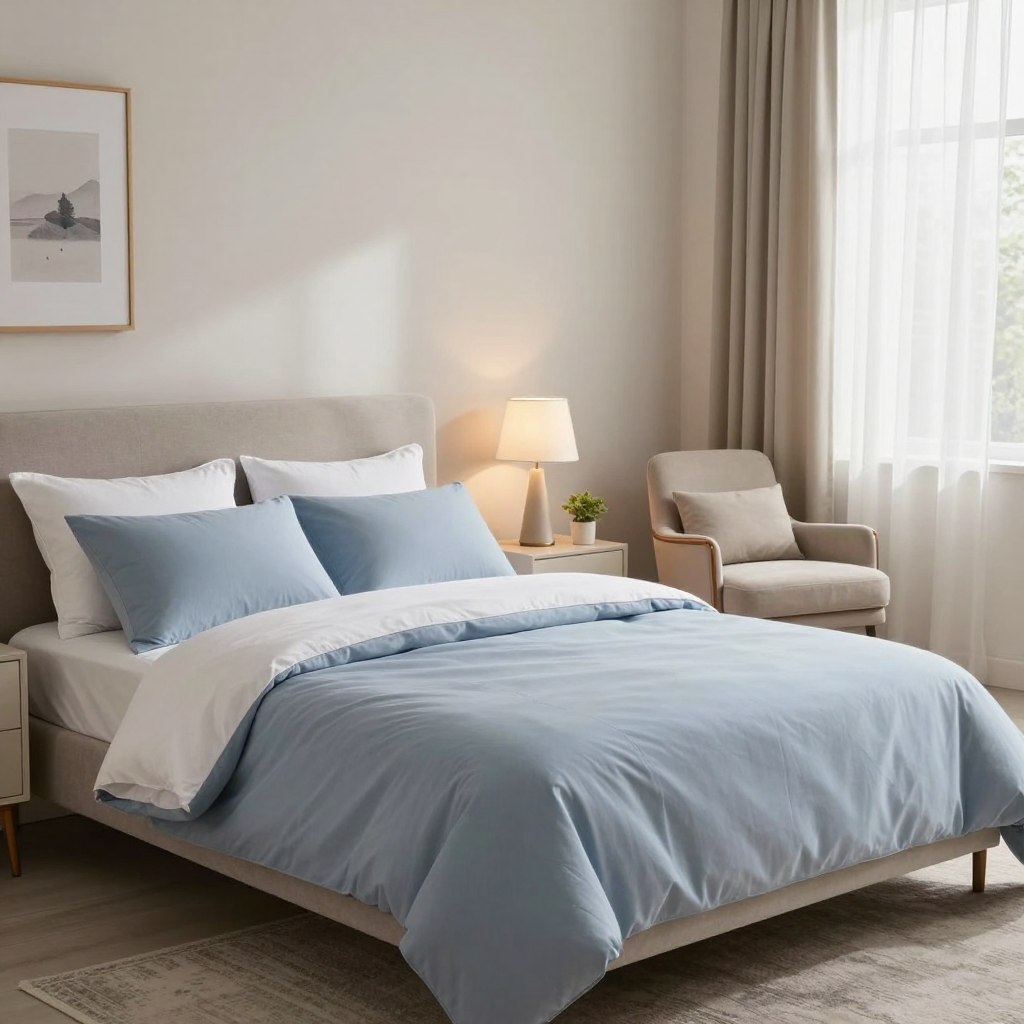
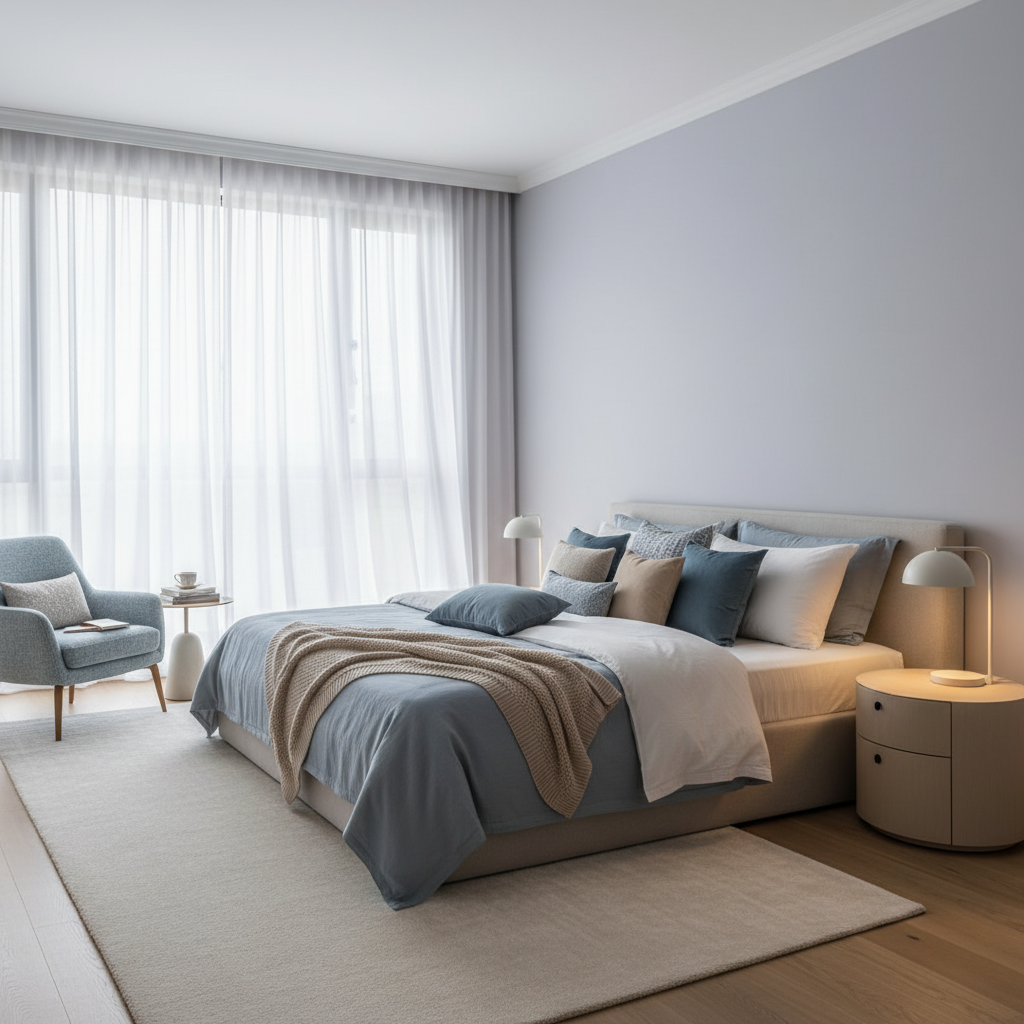
A serene bedroom designed for optimal sleep, featuring balanced furniture placement that enhances both style and tranquility. In the foreground, a neatly made bed with soft, calming linens in shades of blue and white, accented by plush pillows. To one side, an elegant nightstand with a minimalist lamp casting a warm glow, and a small potted plant for a touch of nature. In the middle, a spacious area rug that adds comfort, and an accent chair positioned for relaxation. The background showcases soft, neutral-colored walls adorned with framed art, and a sheer curtain filtering gentle sunlight. The atmosphere feels peaceful and inviting, promoting restful sleep and stylish living. The image is illuminated with natural light, capturing a harmonious balance that embodies restful elegance.

First, check your mattress. An old or uncomfortable one can mess up your sleep and mood. Getting a new, supportive mattress can greatly improve your sleep right away.

Then, think about your room’s air flow and ventilation. Good air circulation keeps your room cool and fresh, helping you sleep better. Try placing your bed away from walls to let air move around it.

Here are some easy steps for better sleep and style:

  1. Move furniture to improve flow
  2. Clear nightstands of clutter
  3. Add soft rugs for warmth
  4. Use window coverings to block light

These simple changes can make a big difference in both sleep quality and how your room looks. Your bedroom becomes a cozy space that supports rest and shows off your style.

Choosing Calming Color Palettes for Restful Bedroom Decor Ideas

Color greatly affects how your bedroom feels. The right shades can help you relax and sleep better. Your wall colors can change your mood and heart rate all day and night.

Understanding color psychology helps you create a space that supports good rest and looks beautiful. When designing your bedroom, think about which colors make you feel calm. Cool tones lower your heart rate and help your body prepare for sleep.
A serene and restful bedroom featuring calming color palettes. In the foreground, soft bedding in muted shades of light blue and gentle beige, complemented by plush decorative pillows. A minimalistic nightstand holds a sleek lamp casting warm, ambient light. In the middle, a large window allows soft natural light to filter through sheer, flowing curtains, enhancing the tranquil atmosphere. A cozy reading nook with a comfortable armchair is placed beside the window, adorned with a soft throw blanket. In the background, soothing wall colors like pale green or soft lavender create a harmonious and peaceful vibe. The overall mood is inviting, relaxing, and stylish, designed to promote restful sleep and enhance the aesthetic of the space. No people are present in the image.

Selecting Soothing Hues for Walls

The best bedroom colors are soft and muted. Consider these popular choices:

  • Soft blues remind people of the sky and water, creating peace
  • Sage green brings nature indoors and feels grounding
  • Pale lavender promotes calmness and gentle relaxation
  • Warm gray offers a neutral backdrop without feeling cold
  • Soft beige creates a cozy and welcoming atmosphere

Paint experts recommend testing colors on your walls before committing. Natural and artificial light change how colors look throughout the day.

Balancing Color and Texture

Solid wall colors can feel flat. Adding texture prevents your bedroom from looking plain or sterile. Use these strategies to create visual interest:

Texture Type Best For Effect on Room
Linen wallpaper Accent walls Adds subtle depth and warmth
Textured paint finish All walls Catches light and creates dimension
Stone or brick veneer Feature walls Brings natural elements indoors
Fabric wall coverings Accent areas Adds softness and visual interest

The 60-30-10 color rule keeps your palette balanced. Use your main color on 60 percent of walls, a secondary color on 30 percent, and an accent color on just 10 percent. This formula creates harmony without overwhelming the space. Your accent color can appear in pillows, artwork, or small furniture pieces.

Soft textures like fabric, wood, and natural materials work with your wall color to create a complete look. A calm color paired with warm textures makes your bedroom feel inviting and restful.

Optimizing Your Space for Functional Bedroom Aesthetics

A beautiful bedroom is only good if it fits your lifestyle. Functional bedroom aesthetics mix style with practical storage. This keeps your room organized and calm. When your bedroom meets your needs, you sleep better and feel more at peace.

Creating smart storage systems is essential for a functional bedroom. Clutter causes stress, and experts say a tidy room can lower cortisol levels by up to 20%. This means a clean room helps your body relax naturally.
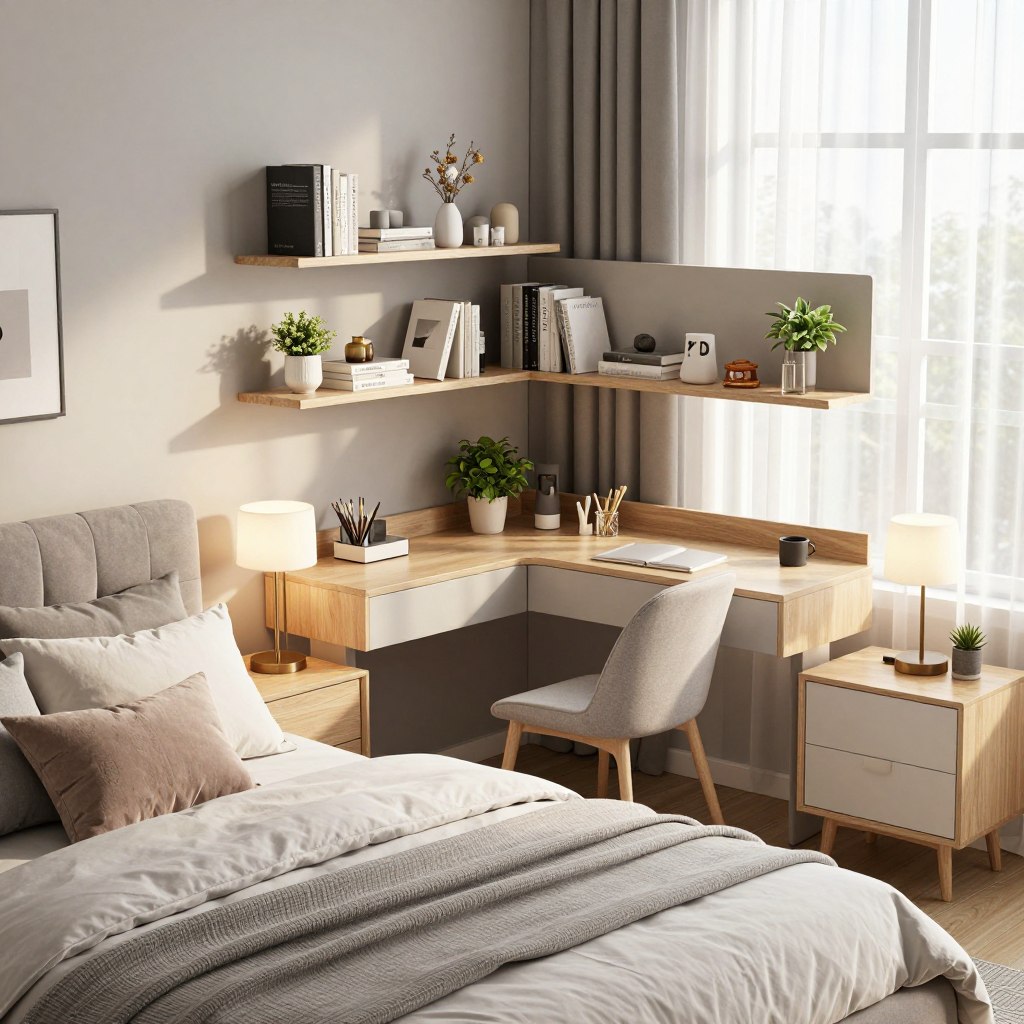
A beautifully designed functional bedroom featuring organized storage solutions. In the foreground, a neatly made bed with soft, neutral-colored linens and an inviting array of decorative pillows. On either side, stylish nightstands with modern lamps. In the middle, a minimalist desk with a sleek organizer holding stationery and a potted plant. Floating shelves on the wall display books and decorative items, emphasizing organization. The background showcases a large window with sheer curtains, allowing warm, natural sunlight to fill the room. Light wood accents and soft grey walls create a calming atmosphere, perfect for relaxation. Capture this scene from a slightly elevated angle to give a comprehensive view of the space, evoking a sense of serenity and purposeful design.

  • Install under-bed drawers for seasonal clothing and extra bedding
  • Add wall-mounted shelving above your desk or dresser
  • Use vertical space with tall bookcases or closet organizers
  • Place storage ottomans at the foot of your bed
  • Choose nightstands with drawers for personal items

Design your bedroom layout to feel spacious and intentional. Keep your floor clear by storing items in designated spaces. This simple approach creates a calm environment that supports better sleep and makes your room feel larger.

Think about traffic flow when arranging furniture. Leave clear pathways from your door to your bed. A well-designed layout removes obstacles and distractions from your nightly routine. Your bedroom becomes a peaceful retreat when every piece serves a purpose and fits your daily needs.

Selecting the Right Bedding for Sleep Quality Interior Design

Your bedding choices greatly affect your sleep. The fabrics you choose can change your body temperature and comfort. For better sleep, picking the right materials is key.

Quality bedding turns your bed into a place for real rest. It works with your body, not against it. Good sheets and pillows keep you cool and comfy all night.
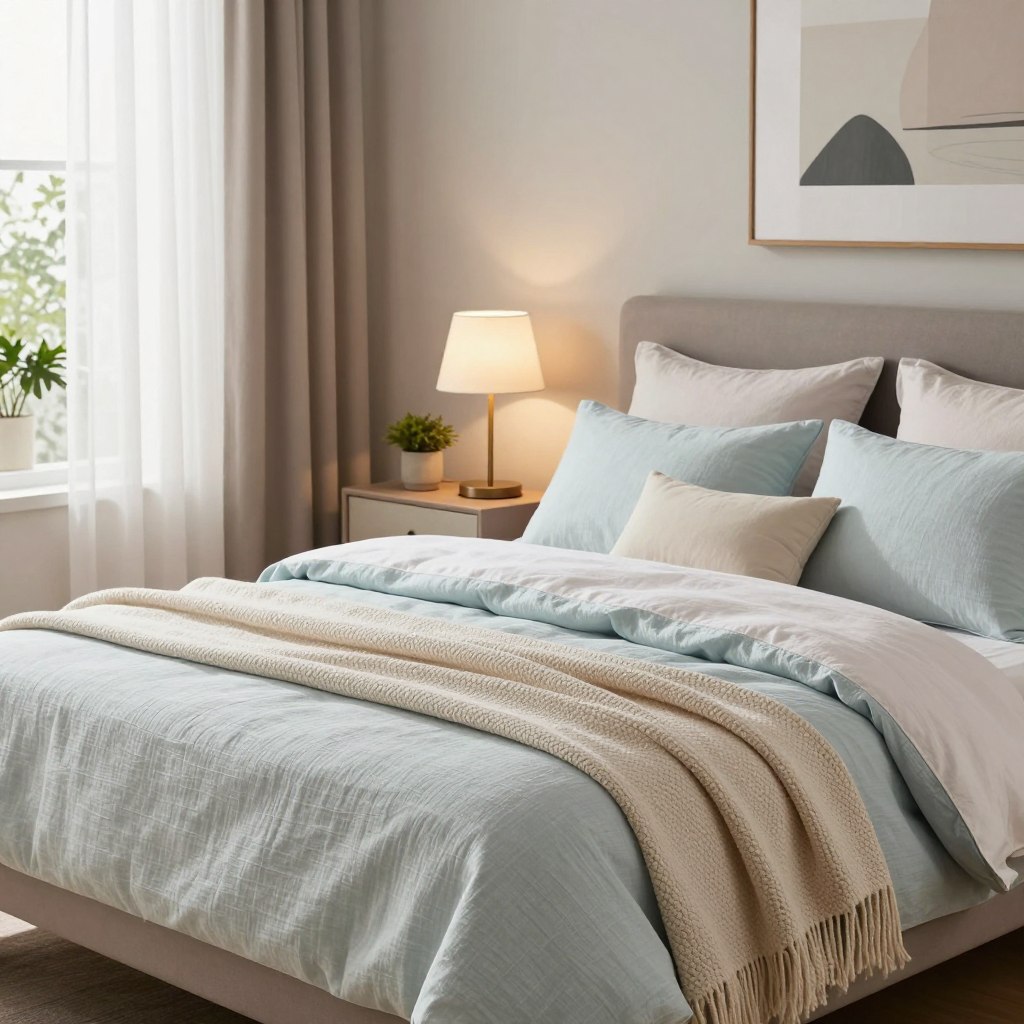
A beautifully arranged bedroom interior showcasing high-quality bedding materials that promote sleep quality. In the foreground, a luxurious king-size bed is adorned with soft, breathable linen sheets in calming pastel shades. Fluffy pillows and a cozy, textured throw blanket add depth and comfort. The middle includes a stylish nightstand with warm ambient lighting from a sleek lamp, creating a serene atmosphere. Soft, diffused natural light streams in through sheer curtains, enhancing the tranquil vibe. In the background, a tastefully decorated wall features calming artwork, while subtle greenery from potted plants adds freshness. Capture this inviting scene with a wide-angle lens, highlighting the harmonious balance of style and comfort, evoking a peaceful mood perfect for sleep.

Choosing Breathable Fabric Materials

Breathable fabrics let air flow, preventing heat buildup. Natural materials are best for controlling temperature and moisture. Here are top fabric choices:

  • Organic cotton — Soft, durable, and naturally breathable for all seasons
  • Linen — Gets softer with washing and stays cool in warm weather
  • Bamboo — Moisture-wicking and hypoallergenic for sensitive skin
  • Silk blends — Gentle on hair and skin while providing temperature balance

Choose high thread counts between 400-600. These feel luxurious without trapping heat. Organic options avoid harsh chemicals that can irritate your skin at night.

Finding the Perfect Pillow Support

Your pillow needs match your sleeping position. Different positions require different support levels:

Sleeping Position Recommended Pillow Type Firmness Level
Side sleepers Thicker, firmer pillows Extra firm
Back sleepers Medium-height pillows Medium
Stomach sleepers Thin, soft pillows Soft

Ergonomic pillows align your head with your spine, reducing neck strain. Memory foam and natural latex both provide excellent support. Replace pillows every 12-18 months for optimal neck and shoulder comfort.

Quality bedding is one of the smartest investments you can make for your overall health and well-being.

The right bedding combination creates a recovery zone where your body truly rests. Soft, breathable sheets paired with supportive pillows help you wake refreshed and ready for the day ahead.

Lighting Strategies for a Sleep Sanctuary Bedroom

Light affects how your body gets ready for sleep. When it gets dark, your brain makes melatonin. The right lighting in your bedroom helps this process. It’s all about using light wisely during the day and evening for better sleep.

Your bedroom lighting changes from morning to night. Bright light in the day keeps you awake and alert. As night falls, dim light tells your body it’s time to sleep.
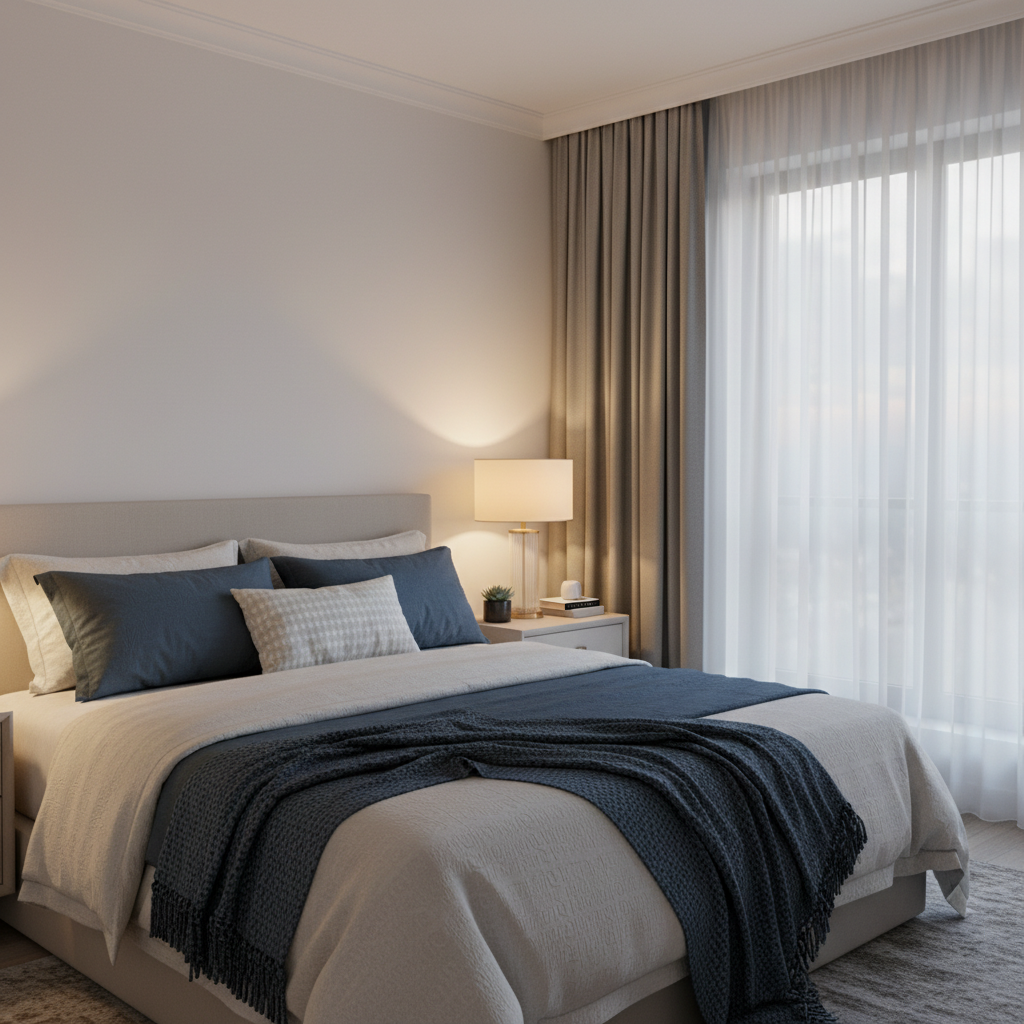
A tranquil bedroom designed as a sleep sanctuary, featuring soft, ambient lighting that promotes relaxation. In the foreground, a plush, neatly made bed with layered linens in calming hues like pale blue and soft white. On either side of the bed, elegant lamps with warm light bulbs provide a gentle glow. In the middle ground, tastefully arranged nightstands hold minimalistic decor and a small stack of books. The background features a large window draped in sheer curtains, allowing in soft, diffused natural light at dusk. The atmosphere is serene and inviting, evoking a sense of peace and comfort, perfect for restful sleep. Capture the scene with a slightly elevated angle to showcase the harmonious layout and soothing colors, emphasizing coziness and style.

Understanding Light’s Role in Sleep Quality

Blue light from screens messes with melatonin. Avoiding screens for 60 minutes before bed can make you fall asleep 15 minutes faster. This small change can make a big difference.

Warm-toned bulbs, with colors between 2700K and 3000K, are like sunset. They help your mind and body relax. Dimmable lights let you adjust brightness as the day ends.

Creating Layered Lighting for Versatility

A good sleep sanctuary bedroom has three kinds of lighting:

  • Ambient lighting lights up the whole room
  • Task lighting is for specific tasks like reading
  • Accent lighting adds a cozy feel

This layered lighting lets your room change from day to night smoothly. You can adjust it as needed. Dimmer switches on ambient lights save you from buying new ones.

Small changes in bedroom lighting can greatly improve sleep quality and style.

Incorporating Natural Elements for a Stylish Bedroom Makeover

Bringing nature into your bedroom makes it a peaceful retreat. It supports better sleep and wellness. Natural elements connect us to the outdoors, even when we stay inside.

This approach makes your bedroom stylish and healthy. Adding plants and sustainable wood furniture turns it into a calming sanctuary.

The link between nature and human well-being is strong. Studies show natural elements reduce stress and improve air quality. Your bedroom becomes a wellness space that nurtures your body and mind.
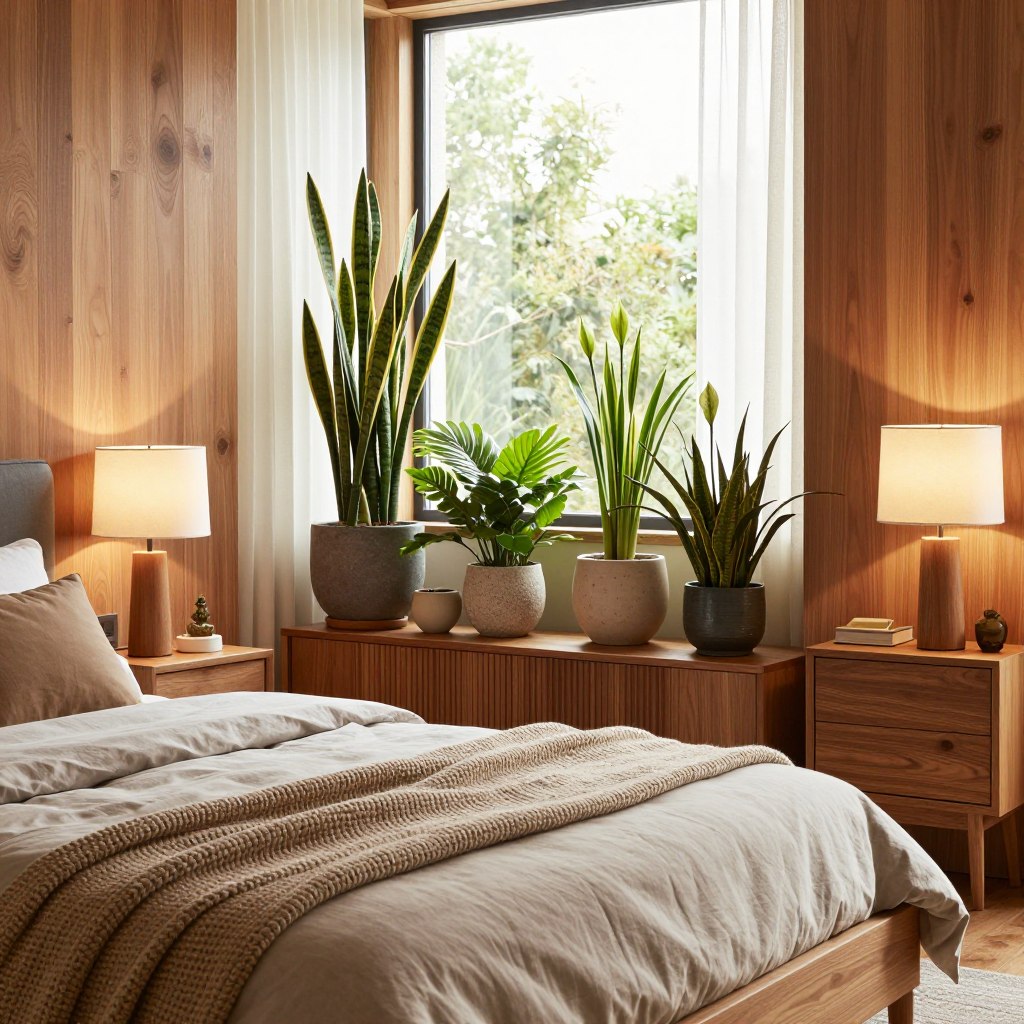
A stylish bedroom makeover featuring natural elements that promote relaxation and aesthetics. In the foreground, a beautifully made queen-sized bed is adorned with soft, earthy-toned linens and a textured knitted throw. On either side of the bed, sleek wooden nightstands hold contemporary lamps. In the middle, a mix of lush green plants, such as snake plants and peace lilies, are strategically placed on shelves and in decorative pots, enhancing the natural ambiance. The background showcases a large window with sheer curtains allowing warm, soft natural light to flood the room, highlighting the rich grain of the wooden furniture. The overall mood is serene and inviting, perfect for boosting sleep and style simultaneously. The scene captures a cozy, modern aesthetic, ideal for promoting relaxation.

Adding Indoor Plants for Air Quality

Indoor plants filter harmful toxins and add beauty. Plants like snake plants, peace lilies, and pothos clean the air. They brighten your space without needing constant care.

  • Snake plants remove formaldehyde and benzene
  • Peace lilies filter ammonia and acetone
  • Pothos plants clean multiple toxins at once
  • Spider plants improve overall air circulation

Put plants on nightstands, shelves, or corners. They create a fresh, natural atmosphere that promotes relaxation.

Using Sustainable Wood Furniture

Wood furniture adds warmth and grounding energy to your bedroom. Sustainable wood comes from responsibly managed forests. It supports environmental conservation.

Choose pieces made from reclaimed or certified wood for maximum impact.

Wood Type Sustainability Level Bedroom Use Durability
Reclaimed Wood Excellent Bed frames, nightstands Very High
Certified Pine High Dressers, shelving High
Bamboo Excellent Flooring, furniture Very High
FSC-Certified Oak High Bed frames, storage Very High

Natural wood pieces add character and longevity to your bedroom. They create a warm, inviting atmosphere that encourages rest. Sustainable materials ensure you sleep well, knowing your choices help the planet.

Decluttering for a Bedroom Upgrade for Relaxation

A cluttered bedroom makes it hard to relax. Too many items in your space can keep your mind racing. This visual clutter stops your brain from unwinding, even when you’re ready to sleep.

The journey to a calm bedroom starts with getting rid of what’s not needed. Decluttering lets your room help you relax. Each item you remove brings you closer to a peaceful place.
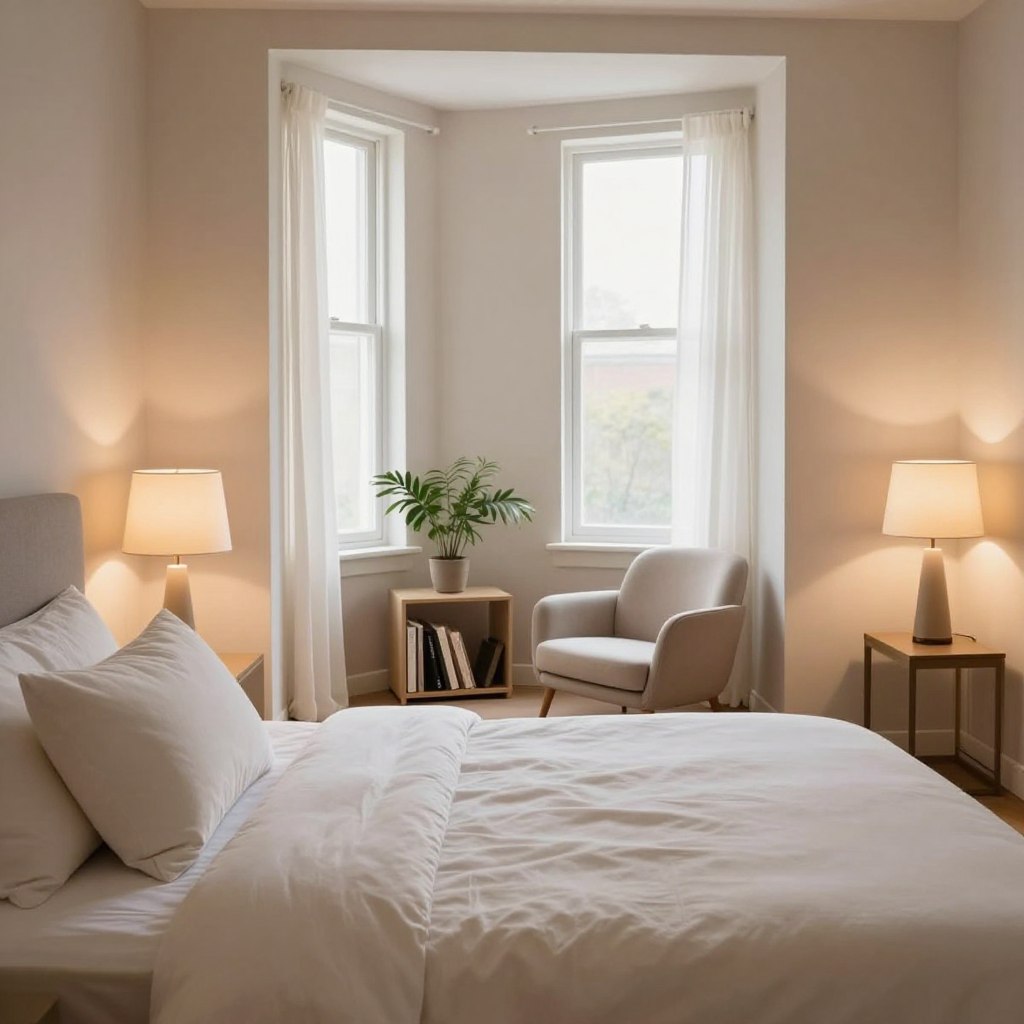
A serene and inviting bedroom designed for relaxation, featuring a beautifully decluttered space. In the foreground, a neatly made bed with soft, neutral linens and a large, plush white throw pillow. On either side, minimalist bedside tables hold elegant table lamps with warm, soft lighting. The middle of the room showcases a cozy reading nook with a modern armchair, a small bookshelf with a few carefully selected books, and a green plant for a touch of nature. The background features soft, pastel-colored walls, a large window allowing gentle sunlight to filter in, and sheer curtains that billow slightly. The atmosphere is calm and tranquil, promoting a sense of peace. The angle captures the entire room, inviting viewers into the relaxing space.

Start With Your Nightstand and Dresser

These areas need your focus. Your nightstand should only have a lamp, water, and maybe a book. Your dresser should have a few items that make you happy. Get rid of old receipts, forgotten things, and anything that doesn’t make you smile.

The Minimalist Approach

Embracing minimalism changes your space. Keep only what’s useful or brings joy:

  • Check every surface for unnecessary objects
  • Donate items you haven’t used in six months
  • Store seasonal items in closets, not on display
  • Create designated homes for everything you keep
  • Clean surfaces weekly to prevent new clutter

This careful decluttering sets the stage for a relaxing bedroom. A tidy room means a clear mind, helping you get the rest you need.

Enhancing Bedroom Style and Comfort with Textiles

Textiles are key to making your bedroom cozy. The right fabrics and textures make your space inviting. They appeal to your eyes and senses. Quality textiles can make your bedroom feel like a luxury hotel.

These soft materials add warmth and reduce noise. They also bring visual interest to your room.

Quality textiles do more than look good. They keep your room warm and quiet. Mixing different textures and colors makes your bedroom a personal sanctuary.

Layering Rugs for Added Warmth

Layering rugs adds depth and warmth to your bedroom. A big rug grounds the space. Smaller rugs add texture and interest.

  • Base rugs in neutral tones provide stability
  • Smaller patterned rugs add personality
  • Natural fibers like jute offer durability
  • Wool rugs provide superior insulation
  • Layering reduces foot noise on hard floors

Start with a wool or jute base rug, 8×10 feet. Add a 5×7 feet accent rug in a matching color. This keeps your feet warm and adds depth.

Choosing Soft Window Treatments

Window treatments affect sleep and style. Soft fabrics control light and add elegance.

Window Treatment Type Light Control Softness Level Best For
Blackout Curtains Complete darkness High Deep sleep
Linen Drapes Filtered light Very high Elegant style
Velvet Panels Excellent blocking Very high Luxury feel
Cotton Sheer Curtains Partial filtering High Bright, airy rooms

Choose blackout curtains in soft fabrics like cotton or polyester. These block light and feel luxurious. Quality window treatments make your bedroom peaceful.

Combine rugs and soft window treatments for a unified look. This creates a cozy and stylish bedroom.

Creating a Consistent Bedtime Routine Environment

Your bedroom is more than a place to sleep. It’s a sanctuary for your body to relax and prepare for rest. A consistent bedtime routine in a relaxing space can improve sleep by up to 30 percent in two weeks. This is because your brain links your bedroom with calm and rest.

A well-designed bedroom layout helps you sleep better every night. It’s about setting up areas for activities that help you relax before bed. Think of your bedroom as a tool for success.
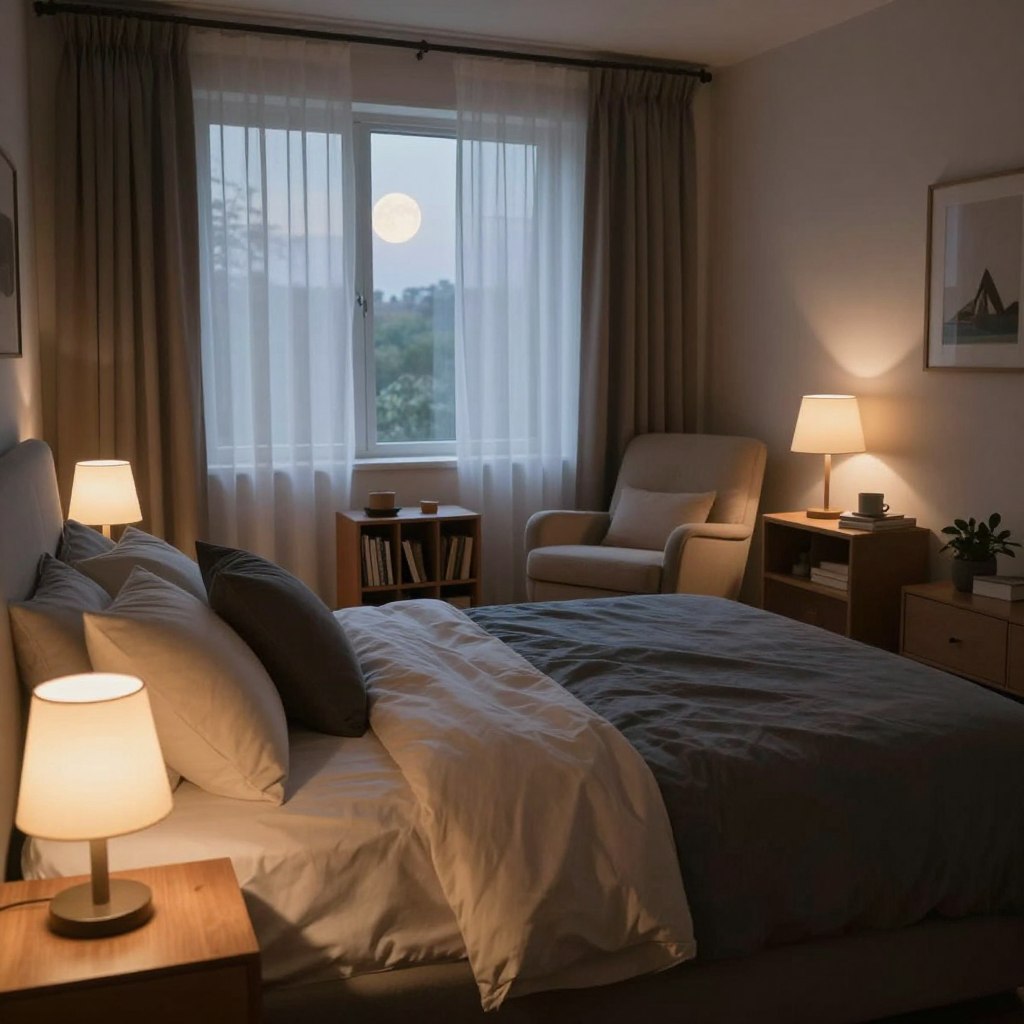
A serene bedroom designed to promote a consistent bedtime routine, featuring a neatly made bed with soft, calming bedding in muted colors. The foreground includes a cozy bedside table with a stylish lamp casting warm, gentle light. In the middle, an inviting armchair draped with a soft throw blanket, beside a small bookshelf filled with relaxing reads. The background showcases a large window with sheer curtains allowing soft, diffused moonlight to filter in, enhancing the tranquil atmosphere. The overall mood is peaceful and harmonious, inviting relaxation. The lighting emphasizes the warm tones, creating a calming ambiance. The scene is captured at a cozy angle that conveys warmth and comfort.

Make a reading nook in a quiet corner. Add a comfy chair, soft lights, and a small table for your book. This signals to your body it’s time to unwind. Pair this with meditation or stretching in another room area.

Setting Up Your Relaxation Spaces

Your bedroom should encourage relaxation. Here’s how to organize it:

  • Have a reading area with a cushioned chair and warm blanket
  • Make a meditation spot with floor cushions and few distractions
  • Use soft rugs to mark different relaxation zones
  • Keep stretching mats in an easy-to-reach corner
  • Arrange furniture to reduce visual clutter

Building Your Evening Ritual

The ritual is as important as the space. Doing the same activities each evening helps your body. This consistency strengthens your natural sleep cycle.

Time Before Bed Suggested Activity Duration Location in Bedroom
60 minutes Reading or journaling 20-30 minutes Reading nook with chair
30 minutes Meditation or breathing exercises 10-15 minutes Meditation corner on floor cushions
15 minutes Gentle stretching 10 minutes Open floor space near window
5 minutes Prepare for sleep 5 minutes Bathroom or bed area

Your bedroom’s design supports your nightly routine. A relaxing space is a powerful tool for better sleep. By arranging your environment for relaxation, you lay the groundwork for restful nights. This benefits your health and well-being.

Conclusion

Your bedroom is more than a place to sleep. It’s a personal space that impacts your health and happiness daily. By mixing style with comfort, you create a space that benefits both your body and mind. The tips from this article help you build your dream bedroom.

Begin with a small change today. Maybe choose a new paint color, buy quality bedding from brands like Brooklinen or Saatva, or clear out what you don’t need. Every small step counts. These choices help you move closer to a bedroom that improves your sleep and peace.

Creating your perfect sleep space is a journey, not a race. As you use these ideas on lighting, natural elements, and decluttering, you’ll see better sleep. Your bedroom can become a calm retreat. Start now and look forward to better nights.

FAQ

How does bedroom design directly impact my sleep quality?

Your bedroom’s design greatly affects your sleep. The National Sleep Foundation says adults need 7 to 9 hours of quality sleep. Making your bedroom comfortable, quiet, and cool helps your body sleep better.
Research shows that less noise and light can help you fall asleep faster. This makes your sleep deeper and more restful.

What is the “triangle of comfort” in bedroom design?

The “triangle of comfort” is a design concept for bedrooms. It focuses on three key areas: the bed, storage, and paths. This design makes your room both functional and stylish.
By focusing on these areas, your bedroom becomes more comfortable and organized. It feels spacious and well-organized for your needs.

Which colors are best for a restful bedroom environment?

Cool colors like soft blues and sage greens are great for bedrooms. They help lower your heart rate and make you feel calm. Using the 60-30-10 color rule helps keep your room’s colors balanced and inviting.
This rule means using one color for 60% of the room, another for 30%, and an accent color for 10%. It keeps your room looking good without feeling too busy or empty.

How can decluttering improve my sleep quality?

Clutter can make it hard to relax at night. Experts say less clutter can lower your stress levels before bed. By keeping your nightstand and dresser tidy, you create a calm space for sleep.
Every item in your room should have a purpose or bring you joy. This helps clear your mind and improves your sleep.

What are the best materials for sleep-friendly bedding?

The right bedding is key for good sleep. Natural materials like organic cotton, linen, and bamboo are breathable and keep you cool. High-thread-count sheets feel luxurious and support your body while you sleep.
These materials help you sleep better and recover faster. They make your bedroom a place for rest and recovery.

How should I choose a pillow for better sleep?

Choosing the right pillow is important for sleep. Your pillow should match your sleeping position to support your neck and spine. Side sleepers need firmer pillows, while back sleepers prefer medium support.
Using a pillow that fits your sleep style can make you more comfortable and reduce morning neck pain. It improves your sleep experience.

What lighting strategies work best for a sleep sanctuary bedroom?

Good lighting is key for a sleep sanctuary. Dimmable lights and warm bulbs help your body relax. Avoiding blue light before bed can also help you sleep better.
Layering different types of lighting makes your room versatile. It goes from bright during the day to calm at night.

Which indoor plants are best for bedroom air quality?

Adding plants to your bedroom can improve air quality and calmness. Snake plants and peace lilies are great because they clean the air and need little care. Choose plants that thrive in low light and don’t need much water.
These plants make your room look good and help keep the air clean. They add to a healthier living space.

How can sustainable wood furniture enhance my bedroom style and comfort?

Sustainable wood furniture adds warmth and character to your bedroom. Look for furniture made from responsibly sourced wood or reclaimed wood. Wood brings natural textures and interest while keeping your room calm.
This approach makes your bedroom stylish and supports the environment. It adds value and authenticity to your space.

What are the benefits of layering rugs in my bedroom?

Layering rugs can make your bedroom more comfortable and stylish. Multiple rugs can help block noise and make your room warmer and cozier. Choose soft rugs that match your room’s colors to add luxury.
This makes your bedroom feel like a high-end hotel suite. It also improves your room’s design.

How should I choose window treatments for better sleep?

Window treatments are important for controlling light and privacy. Blackout curtains block outside light, helping you sleep better. Choose soft fabrics that match your room’s style for a polished look.
Layering different types of curtains gives you control over light levels. It makes your room look good and feel comfortable.

How can I set up my bedroom to support a consistent bedtime routine?

Your bedroom should encourage a bedtime routine. Create a special area for reading or meditation to help you relax. A consistent routine in a relaxing room can improve your sleep by up to 30% in two weeks.
Using your bedroom to support healthy habits helps you sleep better. It makes your bedroom a place for deep, restful sleep.

What high-impact changes can I make for an instant bedroom upgrade for relaxation?

You don’t need a big renovation to improve your bedroom. Small changes like a new mattress or better lighting can make a big difference. Start with one area, like your bedding or color scheme.
These simple changes can greatly improve how you feel in the morning and throughout the day.

How does a calm sleeping space provide psychological benefits?

A calm bedroom acts as a stress buffer. When you enter a relaxing space, your body relaxes. Soothing colors, minimal clutter, and soft textures signal to your brain that it’s time to rest.
This helps you achieve mental clarity and emotional balance. It’s key for restorative sleep and overall well-being.

What role does texture play in creating a restful bedroom environment?

Texture is important for a restful bedroom. It adds depth and warmth, making your room inviting. Soft textures like bedding and rugs create a sensory experience that invites relaxation.
Combining different textures makes your bedroom visually appealing and comfortable. It enhances both the look and feel of your sleep sanctuary.

How can storage solutions improve my bedroom’s aesthetic appeal?

Good storage is key for a stylish bedroom. Solutions like under-bed drawers and wall shelves keep your room tidy. This makes your room feel spacious and calm.
Professional designers say good storage is essential for a bedroom that looks good and supports your health. It makes your bedroom a stylish retreat.

Why is body temperature regulation important for sleep quality interior design?

Keeping your body at the right temperature is vital for sleep. Natural materials like organic cotton and bamboo help keep you cool. Room temperature should be between 60 and 67 degrees Fahrenheit.
By controlling temperature through bedding and room settings, you create the best conditions for sleep. It helps you sleep uninterrupted and recover well.
Share your love

Newsletter Updates

Enter your email address below and subscribe to our newsletter