Address
304 North Cardinal
St. Dorchester Center, MA 02124
Work Hours
Monday to Friday: 7AM - 7PM
Weekend: 10AM - 5PM
Address
304 North Cardinal
St. Dorchester Center, MA 02124
Work Hours
Monday to Friday: 7AM - 7PM
Weekend: 10AM - 5PM


Discover smart entryway storage solutions that help you organize shoes, coats, and accessories while keeping your home clutter-free and welcoming.
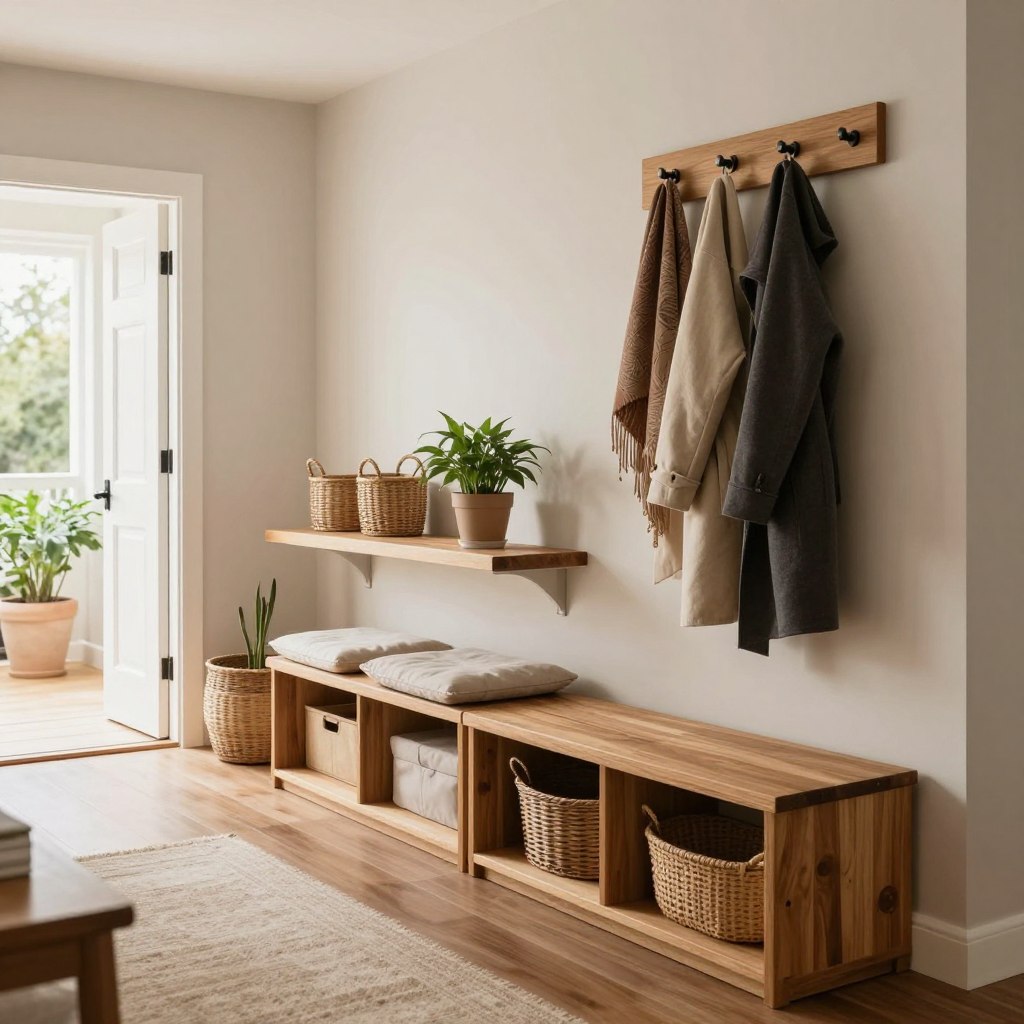
Your entryway sets the tone for your entire home. A cluttered front door can make you stressed before you even step inside. Smart entryway storage solutions can change this reality for your family.
Walking into an organized space feels welcoming and calm. Your guests notice it right away. A tidy entryway shows that you care about your living space.
This guide shares practical ways to transform your foyer. You will learn how to use every inch of available space. These tips work for small apartments and large homes alike.
Good entryway storage combines style with function. You do not need expensive renovations to achieve this goal. Simple changes can make a big difference in how your home feels.
By using the strategies in this article, you can create an entryway that works hard for you. Your daily routine will become smoother and faster. Your family will appreciate having a place for everything.
Before you start shopping for storage solutions, take time to really know your entryway. This step is key for a functional space. Measure dimensions and see how your family uses the area. Smart planning avoids costly mistakes and ensures everything fits perfectly.
Your entryway is the first thing guests see. It’s also where daily chaos happens. Shoes pile up, coats get dropped, and bags land on the floor. Assessing your space helps you build a system that works for your household.
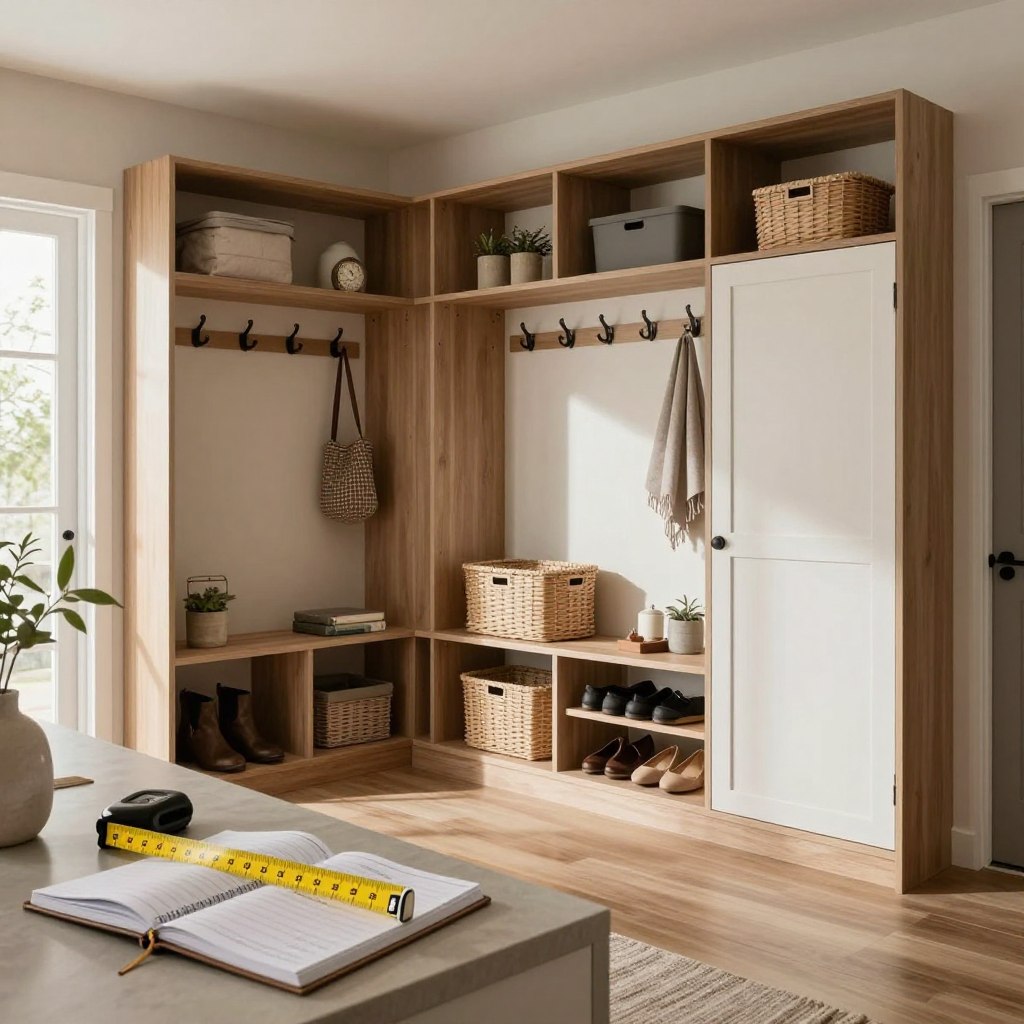
Start by measuring your entryway dimensions. Most entryways are between 20 to 30 square feet. Knowing your exact measurements prevents buying furniture that blocks doorways or creates cramped walkways. Measure the width, depth, and height of your space. Note any architectural features like radiators, outlets, or closet doors that affect placement.
Small space storage needs smart measurement practices. Use a tape measure and write down all dimensions. Include ceiling height, wall lengths, and the space between your door and the nearest wall. These details matter when planning hallway storage solutions that fit perfectly.
| Measurement Type | What to Measure | Why It Matters |
|---|---|---|
| Width | Distance from left wall to right wall | Determines furniture width limits |
| Depth | Distance from entry door to back wall | Affects how far pieces can extend |
| Ceiling Height | Floor to ceiling distance | Allows vertical storage planning |
| Wall Space | Clear wall areas available | Shows hook and shelf options |
Watch how people move through your entryway. Do they rush in and drop bags immediately? Do kids kick off shoes near the door? Do guests naturally move toward the living room? These patterns show you where to place storage items.
Traffic flow analysis prevents bottlenecks. Place frequently used items at convenient heights. Store seasonal gear elsewhere. This approach makes daily routines smoother and keeps your entryway from feeling cramped.
“A well-organized entryway saves time every single day. Small changes in your space layout create big improvements in how smoothly your household runs.”
Understanding your entryway space sets the foundation for everything that comes next. With accurate measurements and clear traffic patterns, you’re ready to choose storage solutions that truly fit your life.
Finding the perfect storage for your entryway is key to a tidy and welcoming space. The right mix of furniture and tools keeps things easy to find and looking neat. Your choices should be both useful and stylish, making your entryway a valuable part of your home.
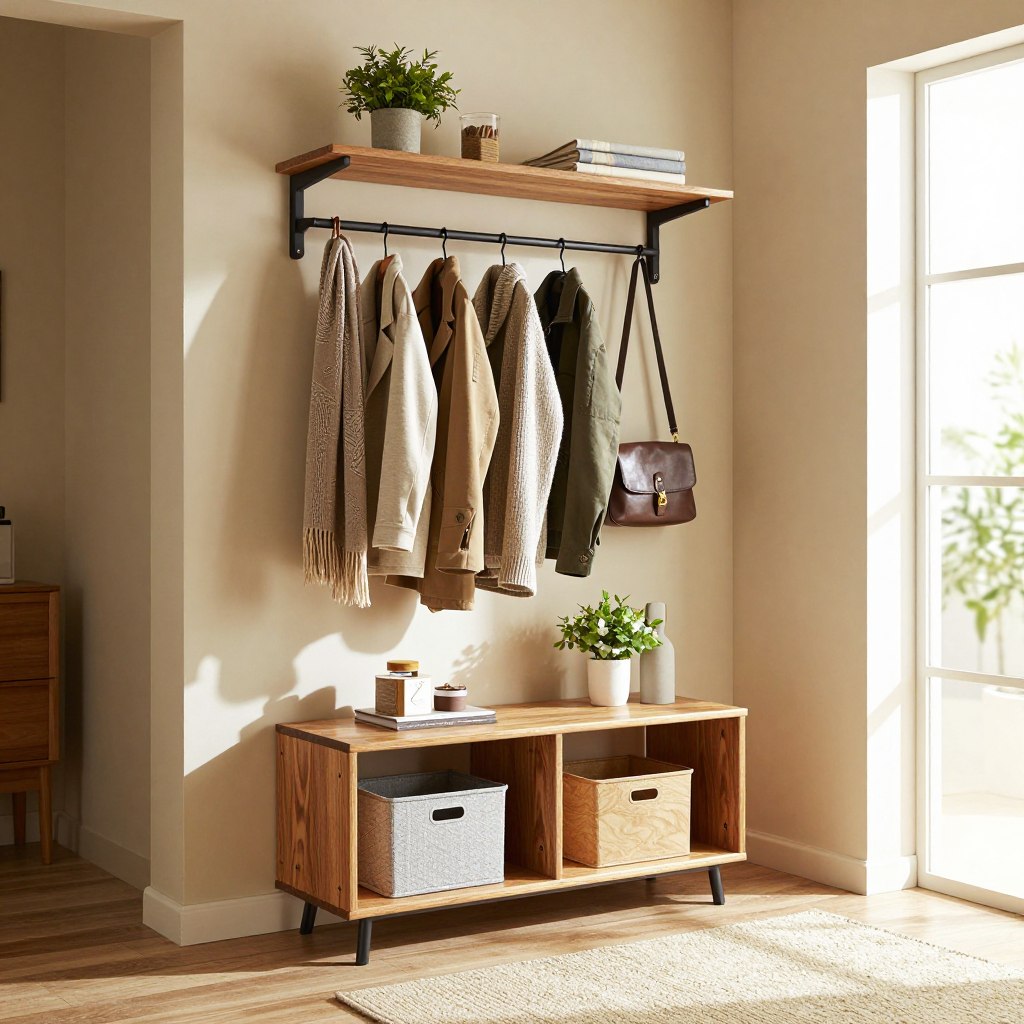
Shelves and cubby systems are flexible and meet your needs. They’re great for showing off decorations and keeping essentials handy. Cubbies help organize space into neat sections, making it simple to find what you need.
A good coat rack or wall hooks offer quick places for jackets and bags. About 70 percent of homeowners choose this for its ease and quick access. Hooks are perfect above benches or near doors for easy use.
Baskets and bins keep small items like gloves and hats out of sight. They fit well inside cubbies or under shelves. Adding labels helps everyone find what they need, from shoes to seasonal accessories.
| Storage Type | Best For | Space Requirements |
|---|---|---|
| Shelves and Cubbies | Mixed items, seasonal rotation | Wall space, floor corners |
| Coat Rack | Jackets, daily use items | Wall space or floor stand |
| Baskets and Bins | Small accessories, hidden storage | Under furniture, shelf inserts |
Using these solutions together creates a complete storage system. It handles shoes, outerwear, and accessories well. Choose materials and finishes that fit your home’s style, but also think about durability and function.
When your entryway feels cramped, think vertically. This approach helps you use space without cluttering the floor. Walls have hidden storage that many overlook. By using your entryway’s height, you can make a space that feels open and welcoming.
Vertical solutions can make your entryway feel less crowded. Smart wall use keeps paths clear and makes daily routines easier. This is perfect for apartments, condos, and smaller homes where space is limited.
Floating shelves are both stylish and practical. They mount to your wall without visible supports, giving a clean look. You can display items like plants, photos, or sculptures while keeping essentials off the ground.
Unlike a standard coat rack, floating shelves are great for storing lighter items at eye level. They’re perfect for decorative baskets that hold gloves and winter accessories. Install shelves at different heights to add visual interest and use your wall space better.
High hooks keep daily-use items within reach while storing seasonal items above. This keeps your main reach zones clear and easy to access for coats you wear often.
| Storage Method | Best For | Height Range | Weight Capacity |
|---|---|---|---|
| Floating Shelves | Decorative items and light accessories | Eye level (60-72 inches) | 15-25 pounds per shelf |
| High Hooks | Seasonal coats and heavy garments | Upper wall (72-84 inches) | 10-15 pounds per hook |
| Coat Rack | Daily-wear jackets and bags | Standard height (60-68 inches) | 20-30 pounds total |
Vertical storage turns your entryway into an efficient space. Your walls become valuable for keeping things organized and accessible. With floating shelves and high hooks, you create layers of storage for different needs.
Choosing smart furniture can turn your entryway into a workhorse. Dual-purpose items offer storage without using extra space. This is ideal for areas where you need both comfort and organization.
Multi-functional furniture tackles two issues at once. It provides a spot to sit while you put on shoes or wait for guests. Plus, it hides storage spots, keeping clutter out of sight. This mix of style and function makes your entryway feel more welcoming and organized.
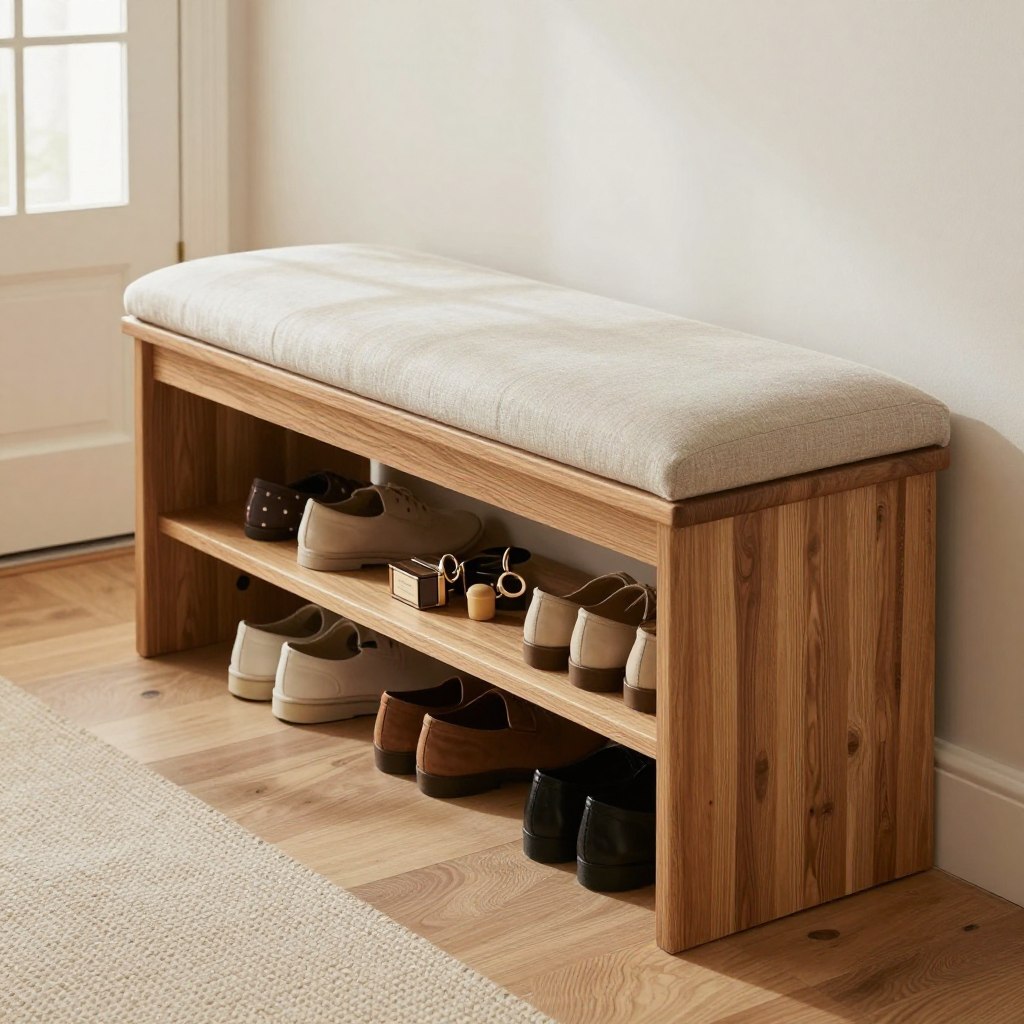
An entryway bench is a smart addition. It offers a comfy seat and storage spots underneath. You can stash shoes, hats, and more out of sight.
When picking a bench, look for:
This single piece saves floor space and creates a cozy seating area.
Ottomans are sneaky storage solutions that guests won’t notice. They act as extra seating, footrests, and storage all in one. Adding an ottoman can save about 15% of floor space while providing comfy seating for visitors.
Benefits of storage ottomans include:
Combining an ottoman with a bench creates a flexible seating area. Your guests have comfy spots to sit, while you keep things organized underneath. This furniture combo maximizes storage without losing style or comfort in your entryway.
Creating specific zones in your entryway makes chaos disappear. When every item has its own spot, your family knows where things go. This makes organizing your mudroom simple and keeps your home running smoothly.
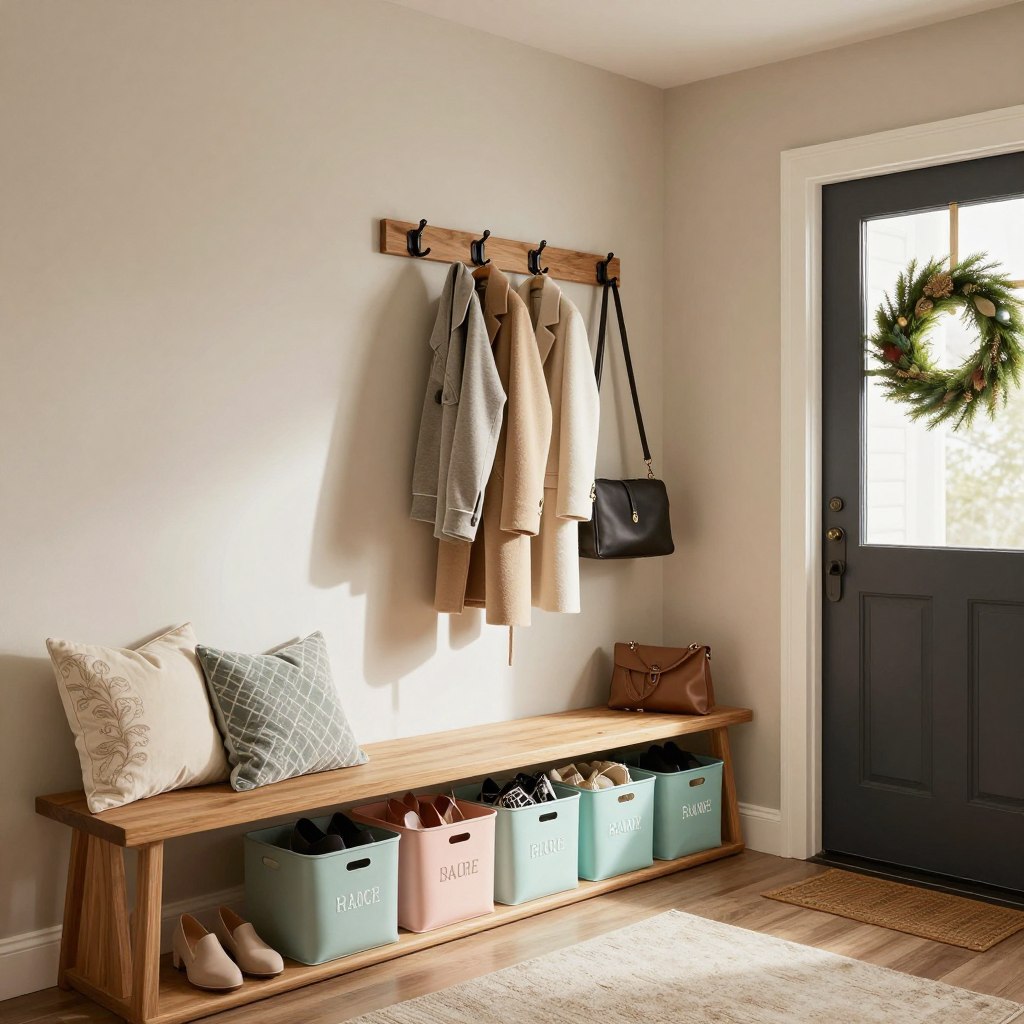
Begin by dividing your entryway into clear sections. Each zone should have a specific purpose and keep related items together. This is great for families with many members needing quick access to their things.
Shoe storage is best when it’s low and easy to see. Use a shoe rack, cubbies, or a slim bench with under-storage. This keeps shoes in one place and prevents them from spreading out.
Labels make your storage system easy for everyone to use. Kids and adults can find their things easily when bins are labeled clearly.
| Item Type | Best Container | Label Suggestion | Location |
|---|---|---|---|
| Winter Gloves | Clear plastic bin | “Cold Weather Accessories” | Upper shelf |
| Scarves | Wicker basket | “Scarves & Wraps” | Mid-level shelf |
| Hats | Open bin | “Hats” | Accessible shelf |
| Seasonal Items | Opaque storage box | “Spring/Fall Gear” | Top shelf |
| Daily Accessories | Drawer organizer | “Daily Use” | Console table drawer |
Use strong label makers or waterproof stickers for your bins. Labels help keep your entryway organized week after week. Your family will stay on track when they can see where things go.
“A place for everything and everything in its place.” – Benjamin Franklin
Good entryway organization comes from zones and labels working together. Your household will love the clarity and simplicity of this system every day.
Your entryway storage should be both beautiful and useful. The right solutions blend with your home’s design and keep things organized. This way, your entryway becomes a space you’re proud to show off, not a place for clutter.
Storage doesn’t have to be boring. With the right materials and colors, your entryway can be a design highlight in your home.
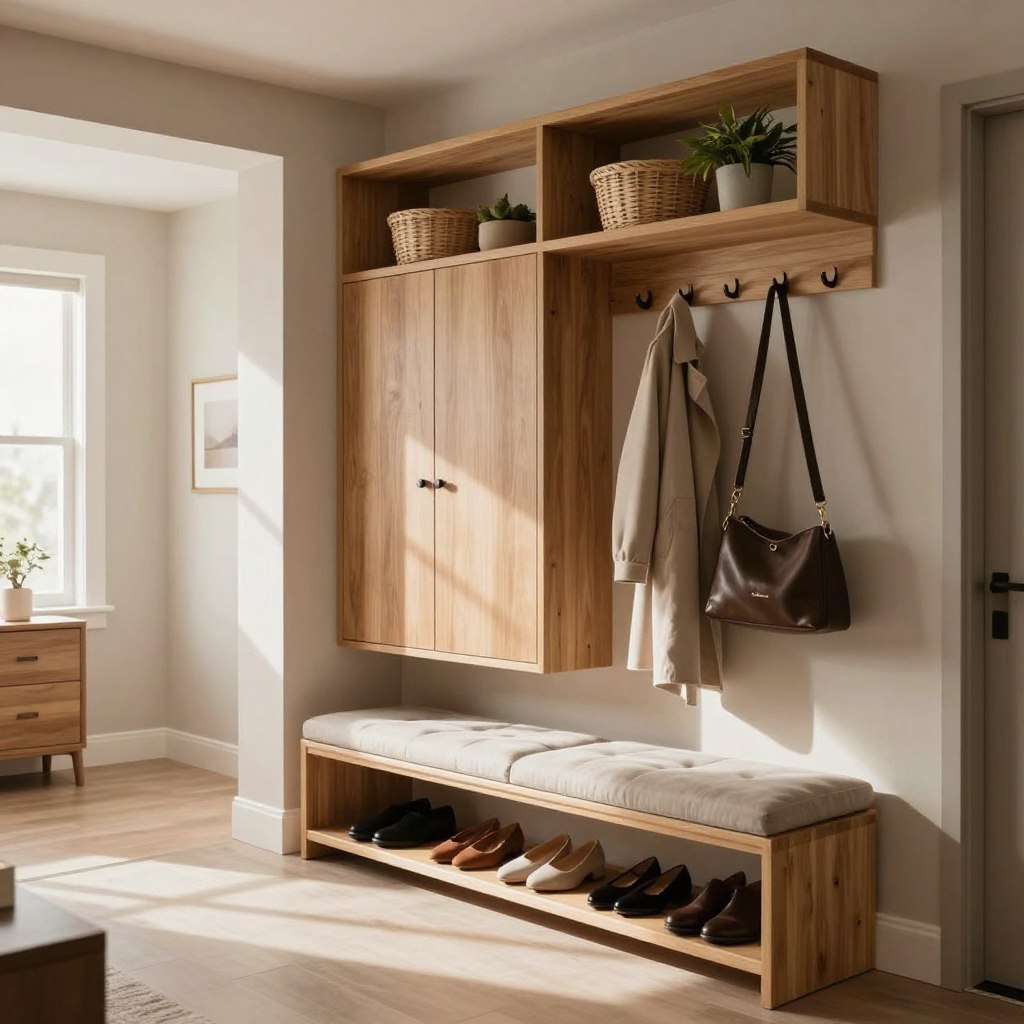
The materials you choose greatly impact your entryway’s look. Natural wood adds warmth and a classic feel. Sleek metal options suit modern homes. Woven materials like rattan or wicker bring texture and a casual vibe.
Consider your home’s existing decor. Wooden shelves match hardwood floors nicely. Metal or glass shelving adds a clean, modern look.
Light colors make small entryways feel bigger and more welcoming. Soft whites, pale grays, and warm beiges reflect light and open up the space. These colors provide a calm backdrop for your storage.
Avoid dark colors that can make small spaces feel cramped. Use pops of color through accessories or artwork, not on large storage pieces.
| Color Choice | Best For | Visual Effect |
|---|---|---|
| White | Maximizing light and space | Makes areas feel bright and airy |
| Light Gray | Modern and versatile designs | Creates sophistication without harshness |
| Warm Beige | Cozy and inviting entryways | Adds warmth while keeping openness |
| Soft Pastels | Adding gentle color accents | Feels personal without overwhelming |
Your storage system becomes a part of your home’s personality when you match materials and colors to your style. This approach turns practical storage into design elements that enhance your entire entryway.
Your entryway needs attention as seasons change. Winter and summer have different needs. Smart seasonal rotation keeps your hallway storage fresh and functional. This prevents clutter and gives you easy access to what you need now.
Planning ahead for seasonal transitions makes a big difference. When you swap out items intentionally, your entryway stays organized and welcoming. Let’s explore how to manage this shift effectively.
Spring and fall are the perfect times to switch up your entryway storage. Heavy winter coats take up lots of space, so pack them away when temperatures rise. This creates room for lighter jackets and accessories suited to warmer months.
Follow this simple rotation plan:
This strategy keeps your entryway looking neat. It also makes finding everyday items much faster. You’re only storing what you currently need.
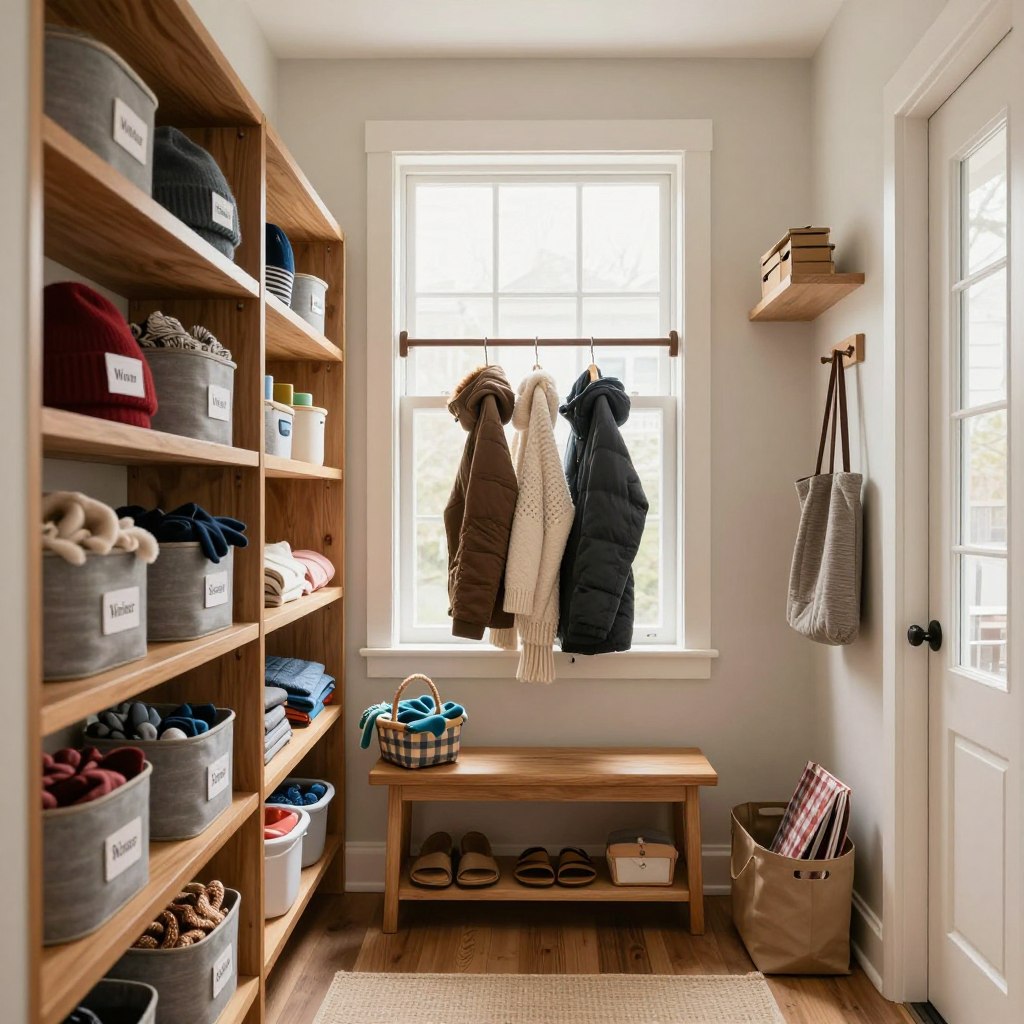
Off-season items need a home outside your main entryway. Closed cabinets, high shelves, or storage closets work perfectly for keeping bulky gear out of sight. This keeps your hallway storage focused on current-season essentials.
Best places for off-season storage include:
| Storage Location | Best For | Benefits |
|---|---|---|
| Upper cabinet shelves | Winter coats and boots | Out of reach, maximizes floor space |
| Closed storage bins | Seasonal accessories | Protected from dust, stackable |
| Hall closets | Bulky jackets and gear | Easy access twice yearly |
| Under-bench storage | Off-season shoes | Hidden yet convenient |
Keeping off-season items hidden lets you display only what you need today. Your entryway stays functional and visually appealing all year long.
Your entryway is the first thing guests see when they come into your home. It’s not just for storing things; it’s a chance to show off your style. Adding personal touches makes this space warm and welcoming, telling your story.
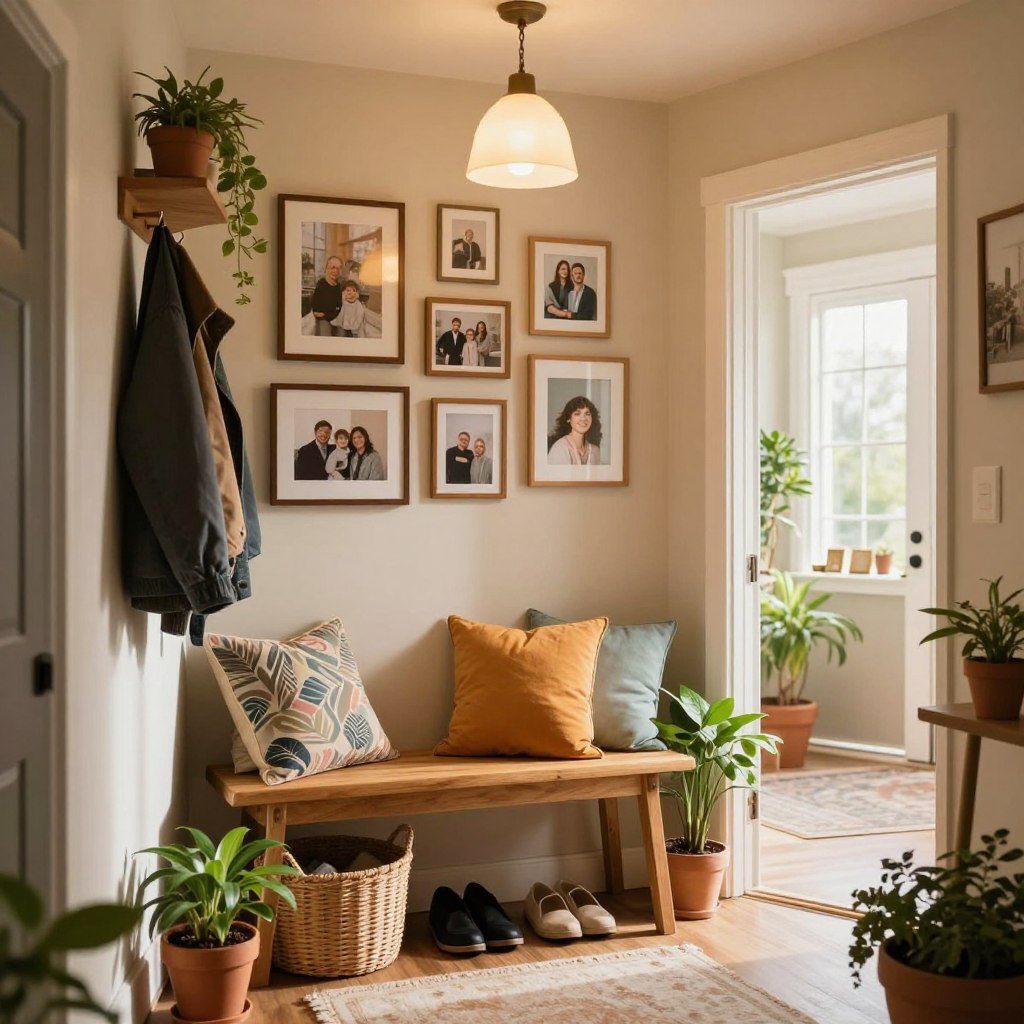
The best entryways mix useful storage with personal touches. By combining storage furniture with artwork, mirrors, and family photos, your entryway shows who you are. This way, your space stays tidy yet feels like home.
Displaying framed artwork or family photos in your entryway makes it feel like a gallery. It adds character and warmth to what might seem like just a place for keys and coats.
Here are some ideas for showing off your pieces:
A statement mirror does more than help with your morning routine. It adds elegance and reflects light in your entryway, making it brighter and more open. This is great in smaller entryways where light is scarce.
When picking a statement mirror, consider:
These personal touches complement your organized storage systems. By mixing practical storage with meaningful decor, you make your entryway complete, inviting, and uniquely yours.
Keeping your entryway organized requires effort and regular care. Without it, even the best storage systems can get messy. Small items pile up, and dust collects on shelves, turning your space chaotic. But, with simple routines, you can prevent this.
Consistency is key to keeping your entryway tidy over time. Regular upkeep stops messes from getting out of hand. It’s like taking care of your home’s foundation—keeping everything stable and working well.
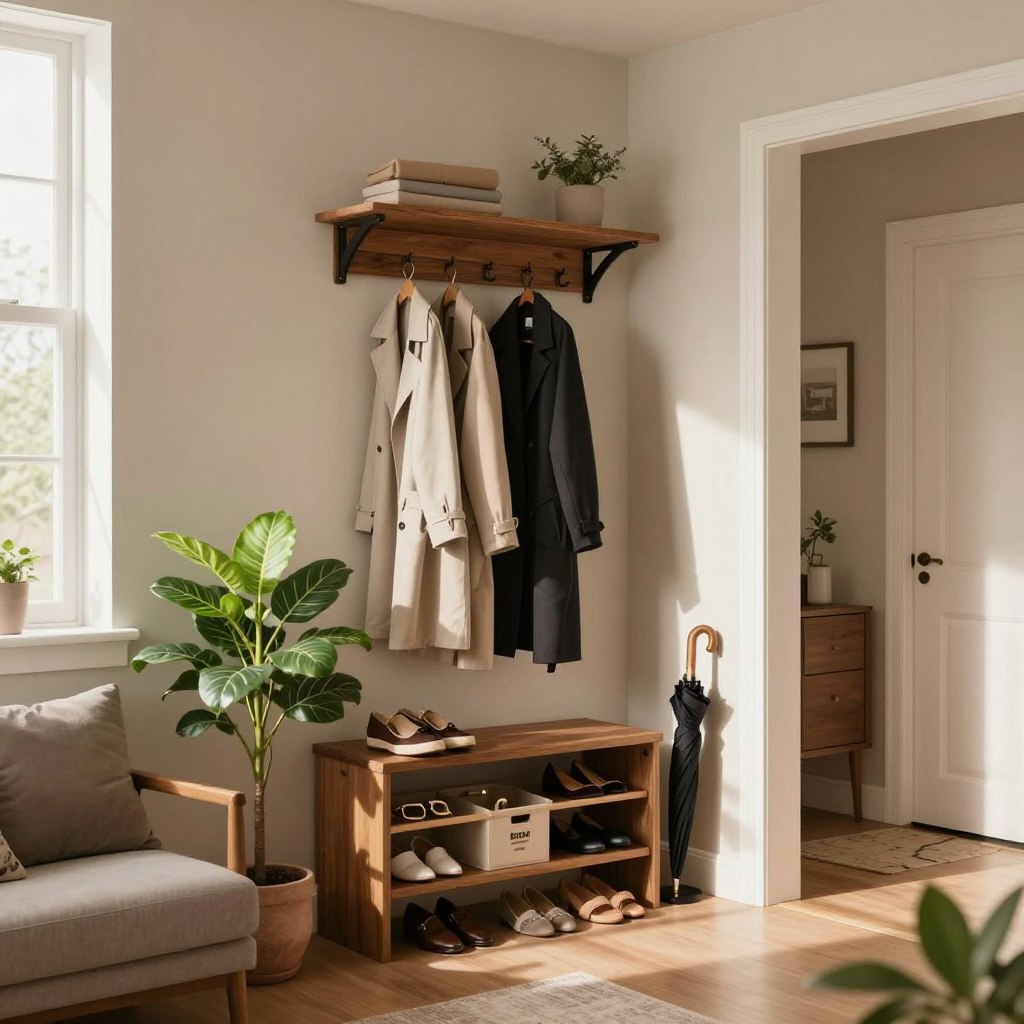
Declutter every three months to see what you really use. Ask yourself:
Get rid of items you don’t need. Old scarves, broken umbrellas, and unused accessories waste space. Donate them to places like Goodwill or The Salvation Army. It’s easy and helps others.
Your entryway also needs a deep clean. Clean shelves, vacuum under benches, and dust coat racks. Check storage baskets for moisture or damage. This keeps your system looking and working great.
A clean entryway makes you want to keep it that way. When it’s spotless and smells good, you’ll put things back where they belong sooner.
Building your own entryway storage can save you money and add a personal touch. DIY projects let you create unique storage solutions that match your home’s style. Plus, many use materials you might already have at home.
Wooden pallets are perfect for rustic storage pieces. You can make coat racks or shoe racks from them. These items add a charming, rustic look to your mudroom. Just paint them to match your entryway’s theme.
Old furniture can also be turned into storage with a little creativity. A vintage dresser can become a bench with cubbies for shoes and bags. Repurposed cabinets can hold hats and scarves. Upcycling not only saves the environment but also adds unique character to your entryway.
If you’re new to DIY, start with simple projects. Look for guides online that fit your skill level. Get your tools and materials ready before you start. These projects can make your entryway both organized and welcoming for everyone.